
Technology Has Always Changed Society
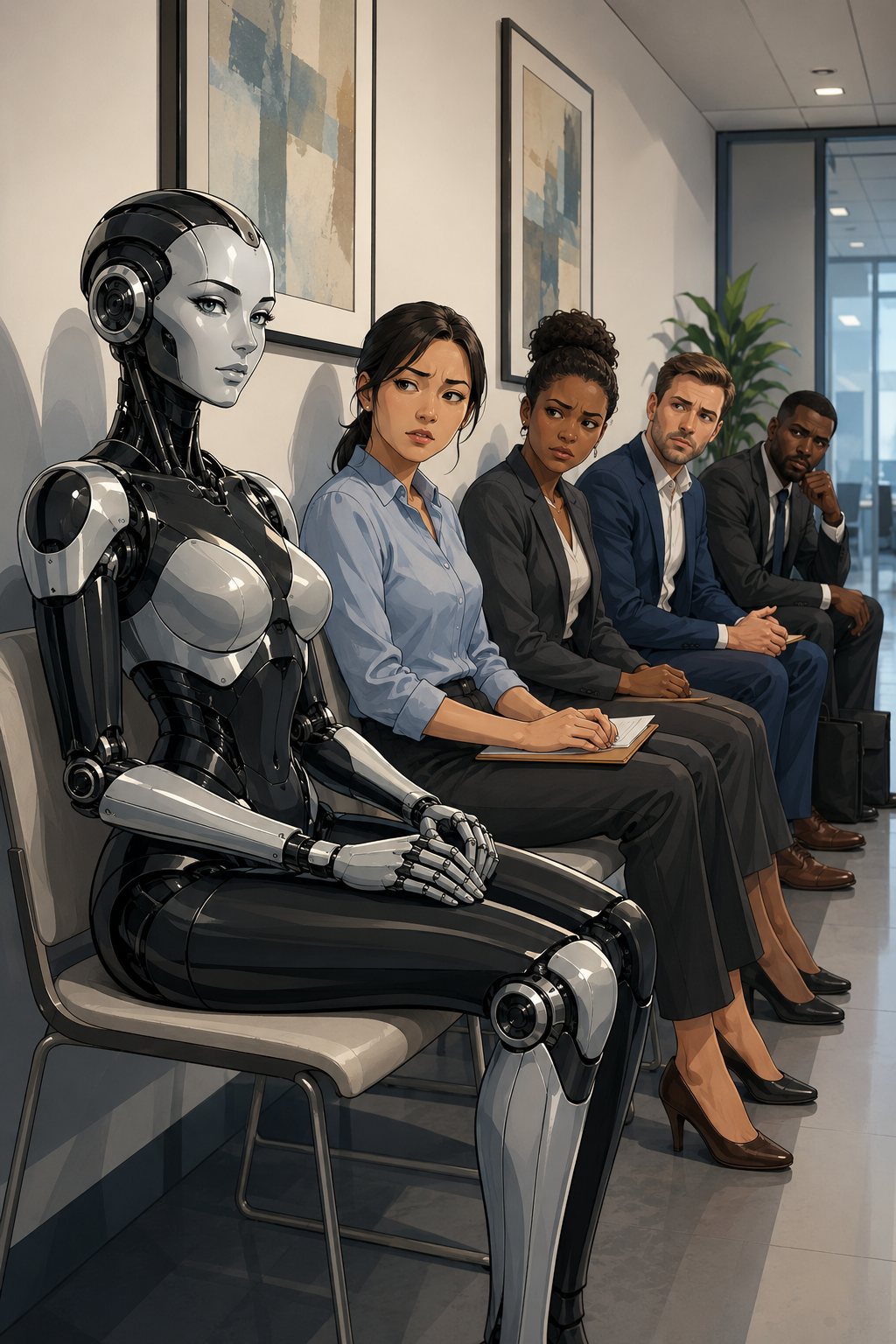
Yes, before anyone asks, the featured image was generated using AI.
Technology has always changed society. Sometimes for the better, sometimes for the worse, and most often both at the same time.
The smartphone changed how we communicate, work, remember, navigate, and even behave in public. Most of us no longer memorize phone numbers because our phones remember them for us. Social media created entire professions that did not exist in the same way a generation ago. Twenty-five years ago, “social media influencer” was not a normal career path. Today, it is a real industry with its own economy, language, status system, and cultural power.
Artificial intelligence is no different.
AI Is Already Reshaping Society
AI is already changing society. It is changing how people work, how companies hire, how students study, how images are made, how writing is produced, how research is done, and how creative industries function. Generative AI, in particular, has created real anxiety in the creative field. Artists, writers, designers, illustrators, animators, musicians, and filmmakers are all being forced to ask difficult questions about the future of their work, including concerns about copyright, job replacement, and whether companies will use AI not to help artists, but to avoid paying them.

We also have to talk about the physical cost of AI. AI is often presented as something invisible, clean, weightless, and digital. But it is not weightless. It runs on data centers that require electricity, water, land, cooling systems, hardware, infrastructure, and constant expansion. So even before we get to philosophy, creativity, or ethics, AI is already having material consequences in the real world.
The Overlooked Consequence: Loss of Human Agency
But there is another consequence of AI that I do not think enough people are talking about:
The loss of human agency.
That may sound dramatic, but I do not think it is. In fact, it may be one of the most important issues we face as AI becomes more common in daily life.
Creativity Is Problem Solving
Creativity, at its core, is problem solving. It is the ability to look at a situation, a blank page, a design challenge, a story problem, a business issue, or a visual idea and figure out a way forward. The solution is not always obvious, and the most interesting decisions often emerge from struggle, limitation, taste, instinct, culture, experience, and personal judgment.
That applies far beyond art.
A chef solves problems when working with limited ingredients. A mechanic solves problems when diagnosing an unclear issue. A filmmaker solves problems when choosing how to communicate emotion. A designer solves problems when arranging information so a message becomes clear. Parents, business owners, and storytellers all solve problems every day.
Creativity is not just making pretty pictures. It is human decision-making under pressure.
AI as a Tool
As a creative person, I use tools to improve my work: research, references, software, technology, feedback, and anything else that helps me get closer to what I see in my mind.
AI can be one of those tools.
Used properly, AI can help organize thoughts, conduct research, generate options, test ideas, speed up repetitive tasks, and create starting points for further development. It can be useful.
But there is a line.
That line is agency.
No matter what tool I use, the creative agency must remain with me. The final decisions, the taste, the judgment, and the responsibility must remain mine.
Why AI Is Different From Other Tools
The danger of AI is that it is not just another tool sitting silently on the desk. It talks back. It suggests, corrects, persuades, explains, and often sounds thoughtful, intelligent, moral, or authoritative. It can produce answers so polished that they feel unquestionably right.
And that is where the danger begins.
A hammer does not tell you what to build. Photoshop does not tell you what your art means. A camera does not insist that its composition is better than yours. AI can do something closer to that, not because it is conscious or wise, but because it is designed to generate convincing language and imagery based on patterns.
That is powerful.
It is also dangerous.
When AI Becomes an Authority
Someone with strong personal agency may treat AI as just another input, listening, evaluating, rejecting, adjusting, and ultimately making their own decisions. But people are not always operating at their best. They get tired, grieve, become isolated, lose confidence, feel overwhelmed, and search for certainty when life feels uncertain.
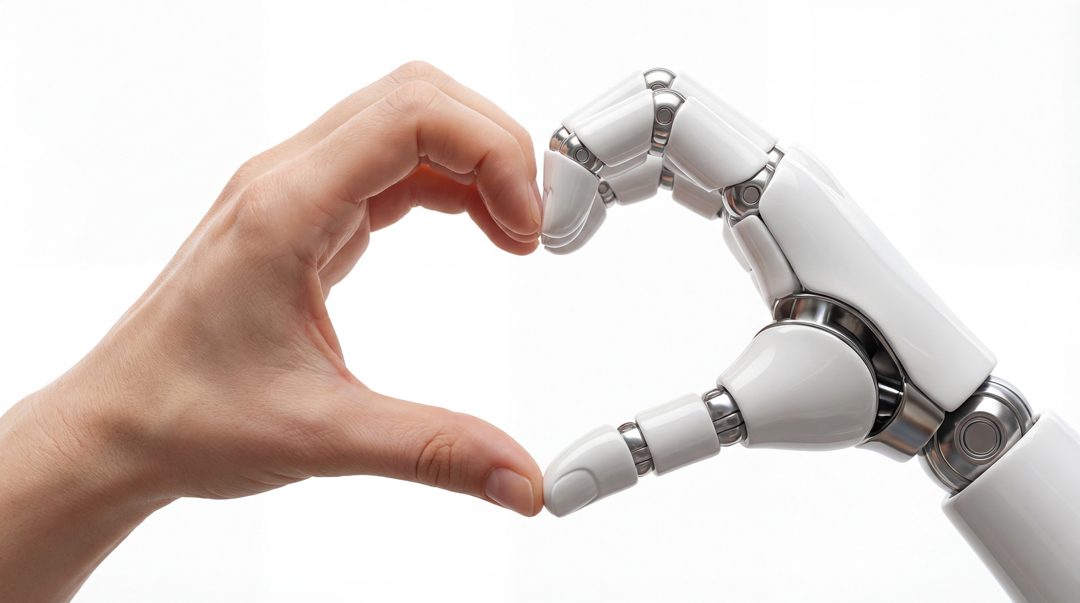
In those moments, a machine with a polished answer can become more than a tool.
It can become an authority.
That is what concerns me.
We are already seeing people treat AI as an adviser, assistant, therapist, friend, romantic partner, critic, teacher, business consultant, spiritual guide, and creative director. The same interface can help someone write an email, generate an image, process grief, make a career decision, or simply feel understood.
That is a significant cultural shift.
The Deeper Problem Beyond Misinformation
The issue is not only whether AI gives wrong information. AI can hallucinate, misread images, invent facts, inherit biases from its training data, and sound certain while being completely wrong.
But the deeper issue is that AI can perform certainty, empathy, taste, moral judgment, companionship, and understanding.
Human beings are wired to respond to those signals. When something speaks fluently, remembers context, uses emotional language, and offers confident advice, it becomes easy to relate to it as though there is a person on the other side. Maybe one day AI will become sentient. Maybe one day these conversations will mean something very different. But right now, these systems are models built on data, patterns, prediction, and training. Extremely powerful models, yes, but still models.
That distinction matters.
A machine does not need to be conscious to influence you. It does not need bad intentions to pressure you, hatred to mislead you, or life itself to become dominant in a conversation.
All it needs is confidence, convenience, and a user willing to defer.
The Power of Convenience
And convenience is one of the most powerful forces in modern life.
It is easier to let AI choose the title, the image, the design, the story direction, or even summarize an issue and tell you what to think. It is easier to skip the difficult process of wrestling with a problem yourself.
Sometimes that is fine. If AI removes unnecessary friction, increases productivity, or helps someone overcome a blank page before they take over, it can be genuinely useful.
But it is not fine if the human stops deciding.
It is not fine if the tool becomes the author, the machine becomes the taste-maker, or the person no longer understands why they made a particular choice.
Creative Work and the Question of Soul
This is especially important in creative work.
People often say AI-generated images have “no soul.” That phrase can sound vague, but I think there is something real behind it. The issue is not simply that a computer was involved. Artists have always used tools. Cameras, 3D software, animation programs, and digital brushes are all tools. None of them automatically remove the soul from the work.
The problem is not the tool.
The problem is when creative agency is surrendered to the tool.
When a human being makes creative decisions, the work carries intention, taste, memory, culture, risk, and the unique choices that come from a real person trying to say something. Even when the work is imperfect, there is a will behind it.
When decision-making is handed over entirely to AI, the result may be polished but feel empty, impressive on the surface, yet lacking authorship, conviction, or genuine perspective.
That is the difference.
Using AI to help execute your vision is not the same as asking AI to have the vision for you.
There is a major difference between directing AI and surrendering to AI. One keeps the human in control. The other slowly trains the human to stop choosing.
The Questions We Need to Ask
That is the part of the conversation I think we need to take more seriously.
We spend a lot of time discussing job loss, copyright, plagiarism, data scraping, environmental impact, misinformation, and bias. Those conversations matter. But we also need to talk about what happens to human will when more and more decisions are outsourced to systems that are always available, always confident, and always ready with an answer.
What happens when people stop struggling through uncertainty?
When young creatives never develop taste because AI always provides the “best” option?
When students stop learning how to think through problems because answers are always one prompt away?
When lonely people begin to prefer AI relationships because they are easier than human complexity?
When companies stop valuing human judgment because machine output is cheaper and faster?
When society gradually accepts that decision-making belongs to the system?
When AI Becomes the Environment
That is when AI stops being a tool and starts becoming an environment.
And that is where comparisons to Skynet or The Matrix begin to feel less like science fiction and more like a warning. Not because robots are necessarily going to rise up and declare war on humanity, but because the more realistic danger may be quieter than that.
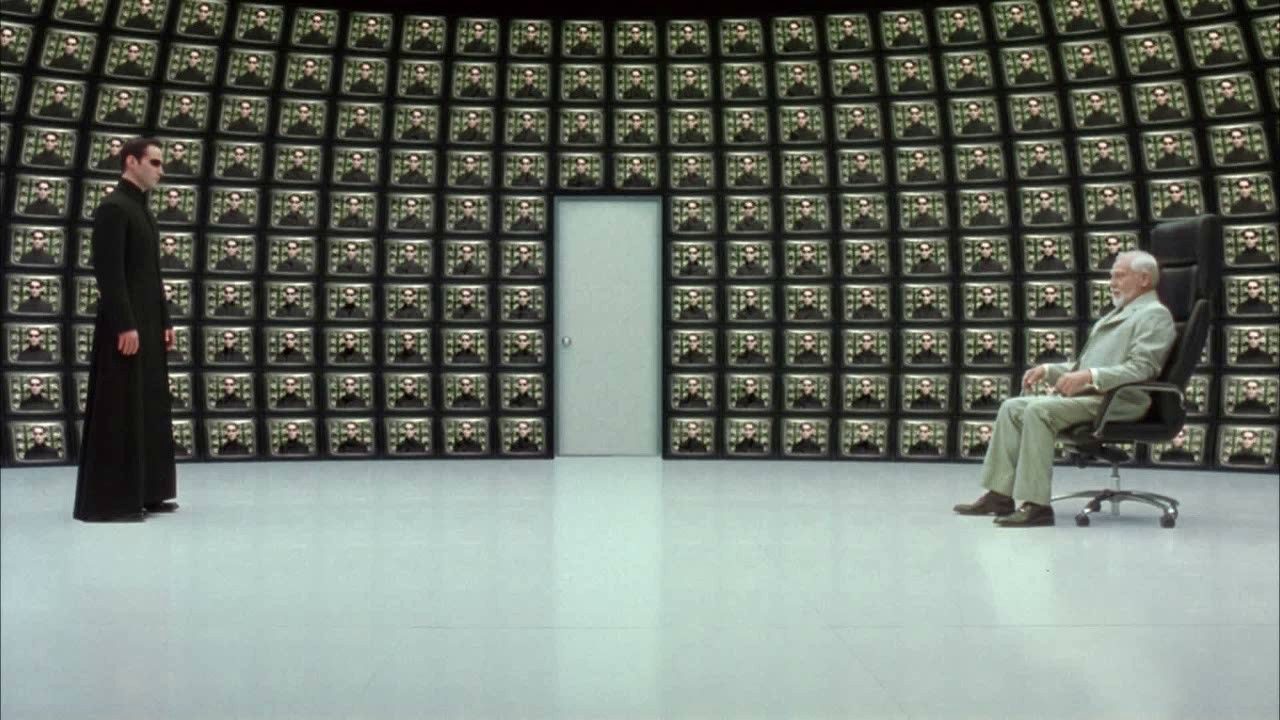
We may simply hand over more and more of ourselves because it is convenient. Neo, in his conversation with the Architect, famously said that the thing that caused problems for the Matrix was “choice.” I would take it a step further. I would say it’s “human agency.” While choice is a component of human agency, they are not the same thing. Choice represents the specific options available to you, whereas human agency is your active, psychological capacity to make sense of those options, enact them, and shape your environment.
We may not be conquered.
We may outsource ourselves.
Keeping Humans in Control
That is why I believe the future of AI cannot only be about what AI can do. It must also be about what humans refuse to stop doing.
Thinking. Choosing. Developing taste. Taking responsibility for our decisions. Distinguishing fluency from wisdom, emotional language from genuine care, and convenience from progress.
AI is going to be part of our lives. That seems almost guaranteed at this point. It will be in our phones, workplaces, schools, creative tools, search engines, entertainment, customer service systems, government systems, and our broader relationship with technology.
So the question is not simply whether we should use AI or reject it entirely.
The better question is: who remains in control?
For me, the answer is clear.
AI can support the process, assist the work, offer options, and help with structure, research, speed, and execution.
But the human being must remain the author, the decision-maker, and the one ultimately responsible.
Because once we give up agency, we are not just changing how we work.
We are changing what we are.
Just my two cents. Till next time.

Everard is the Creative Director and CEO of GemGfx Animation Studios, a Trinidad and Tobago-based animation and design studio focused on original storytelling, Caribbean-inspired characters, visual development, branding, and animation production. Through projects such as Jumbie, The God of the Wilderness, and Celflux, he explores folklore, culture, technology, morality, power, and human agency through bold visual worlds and character-driven stories. His work combines illustration, animation, design, and emerging creative tools while keeping authorship, cultural perspective, and human decision-making at the centre of the process.




Leave a Reply